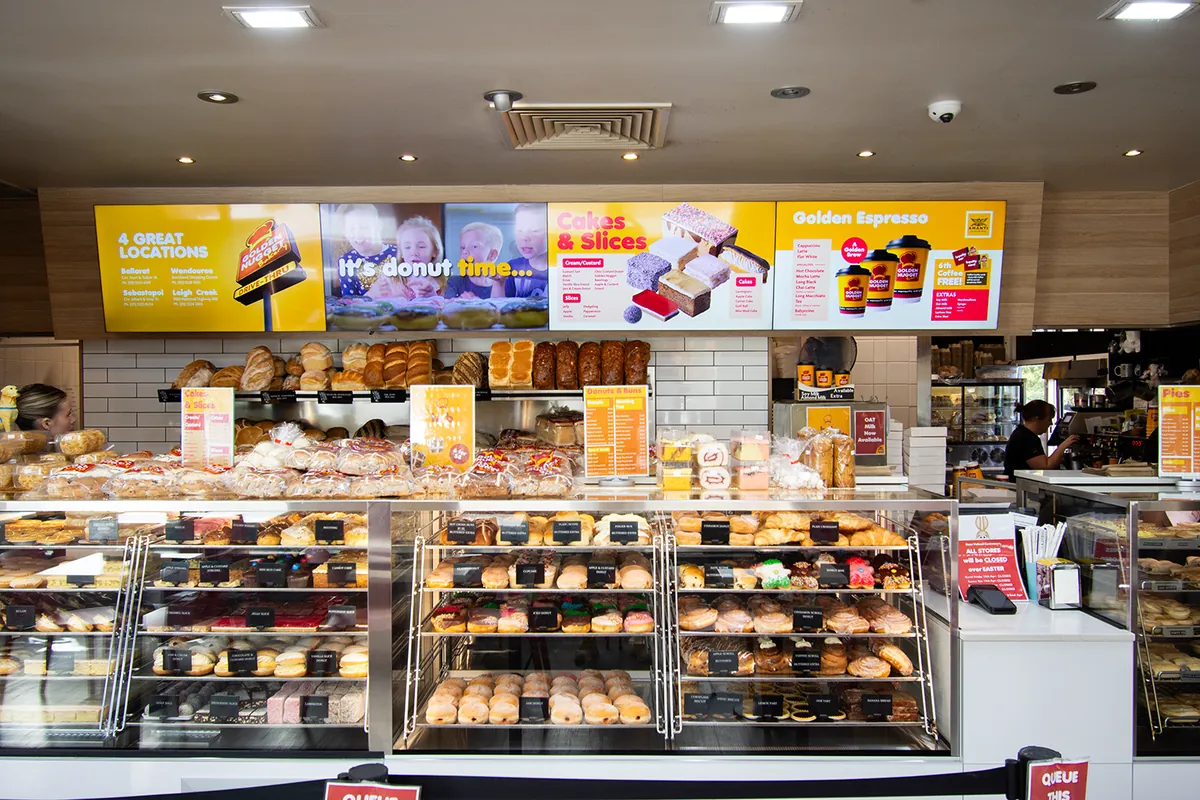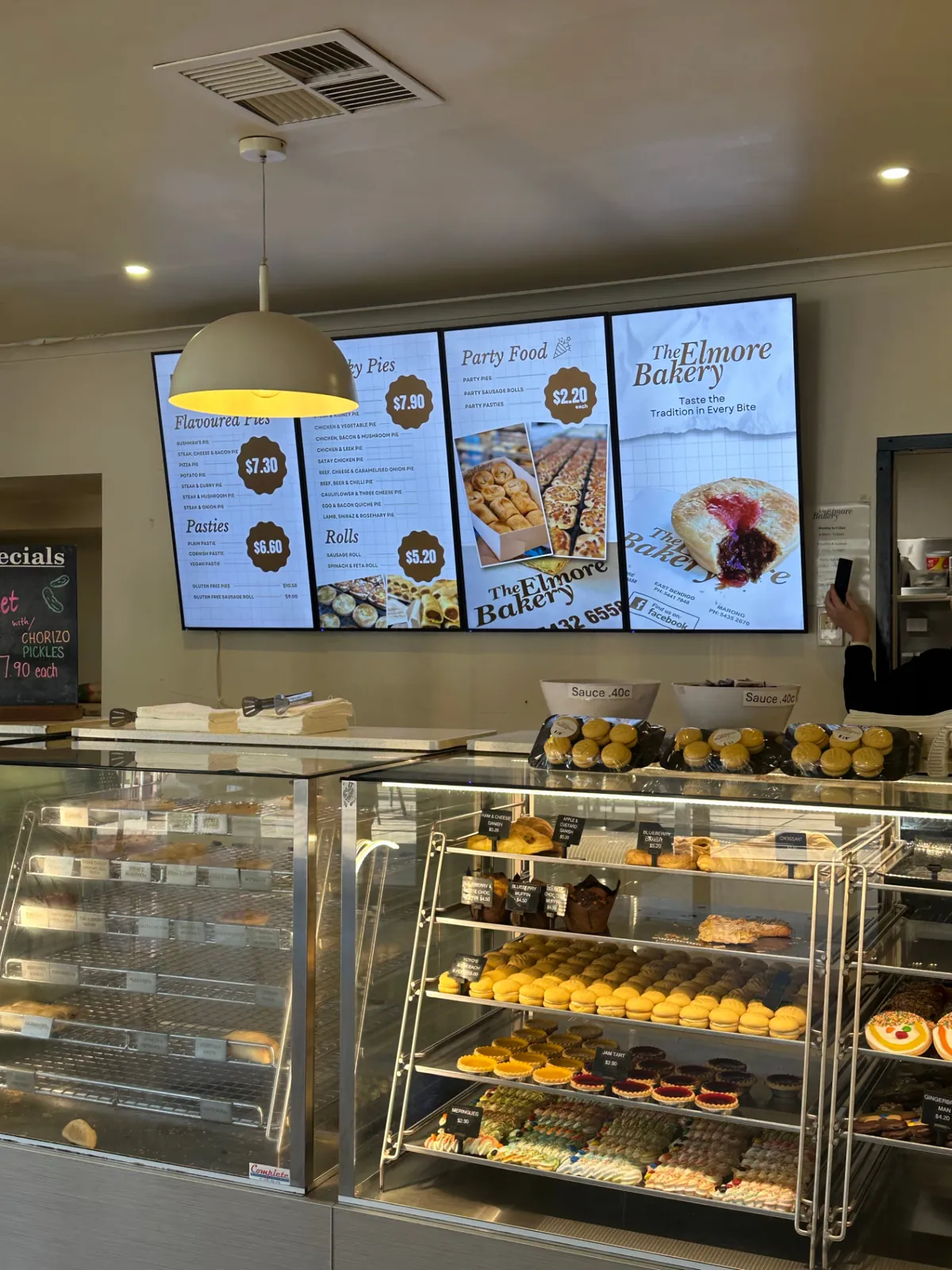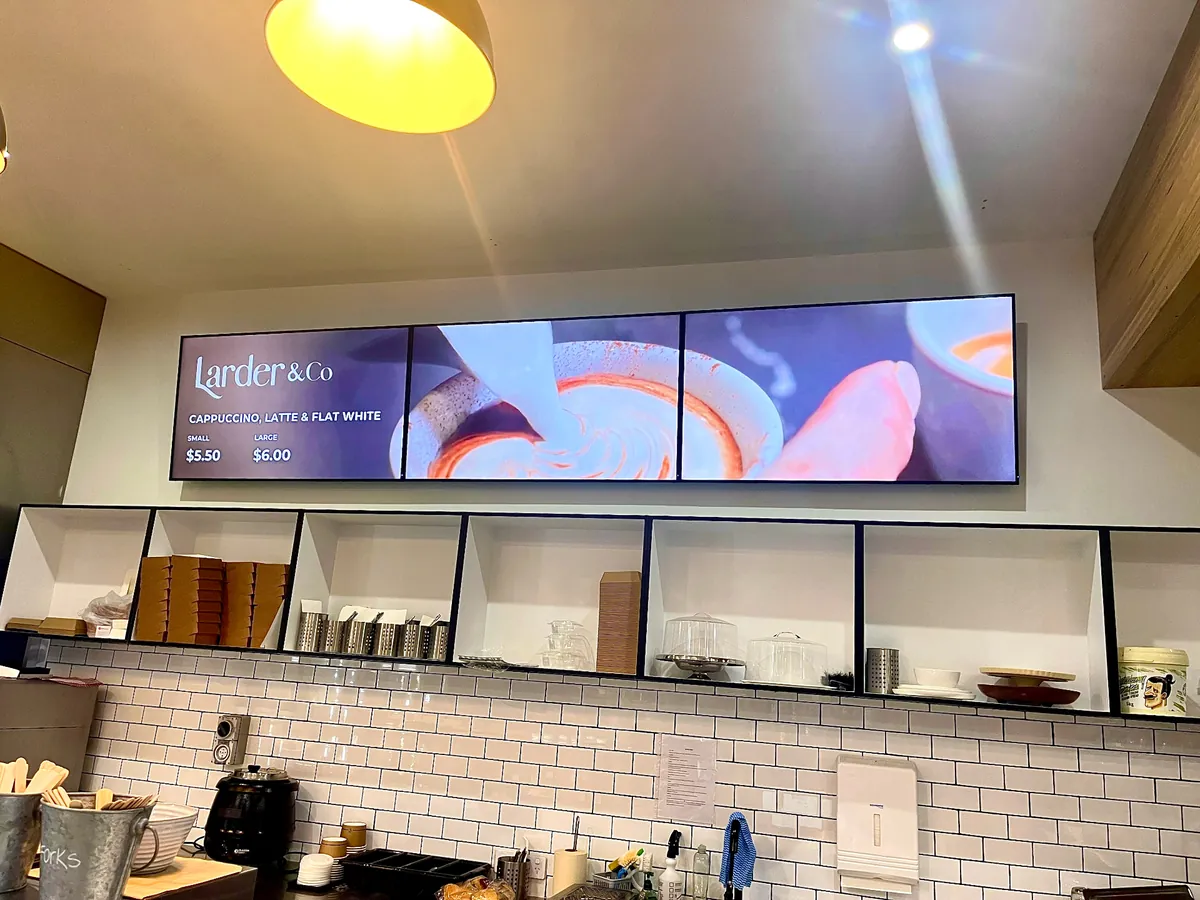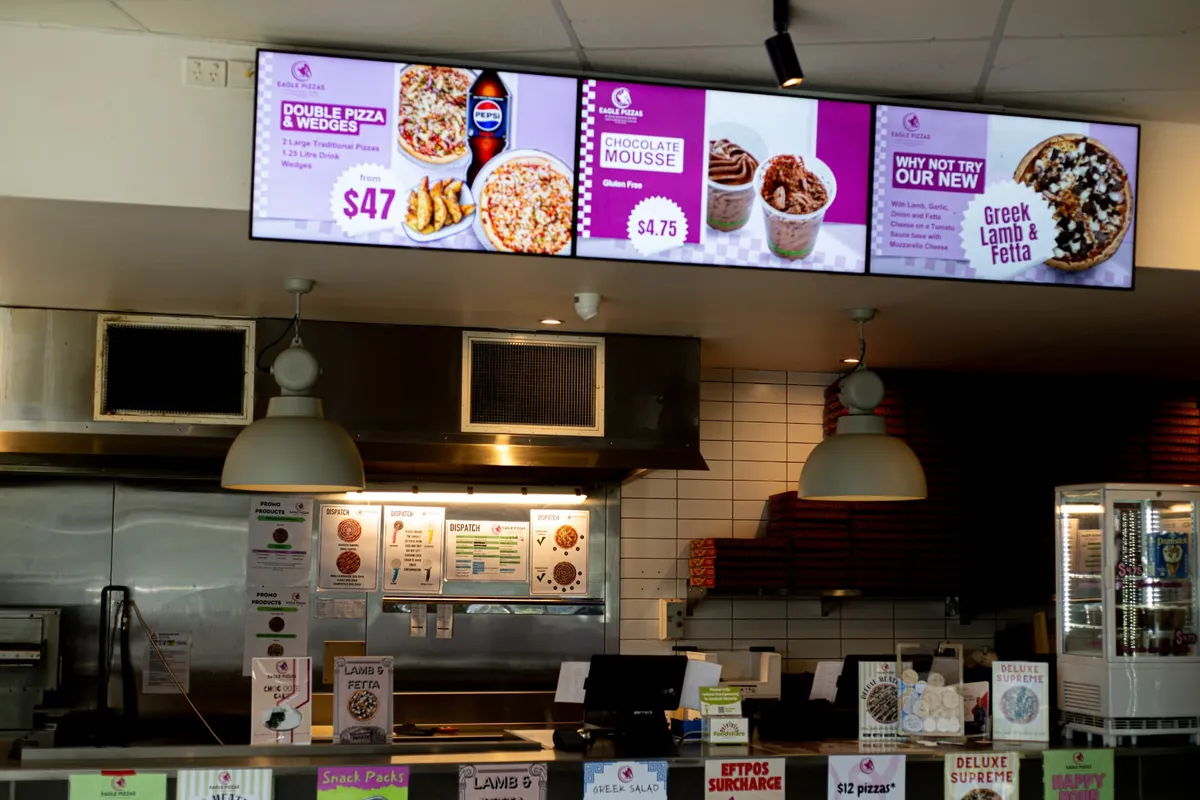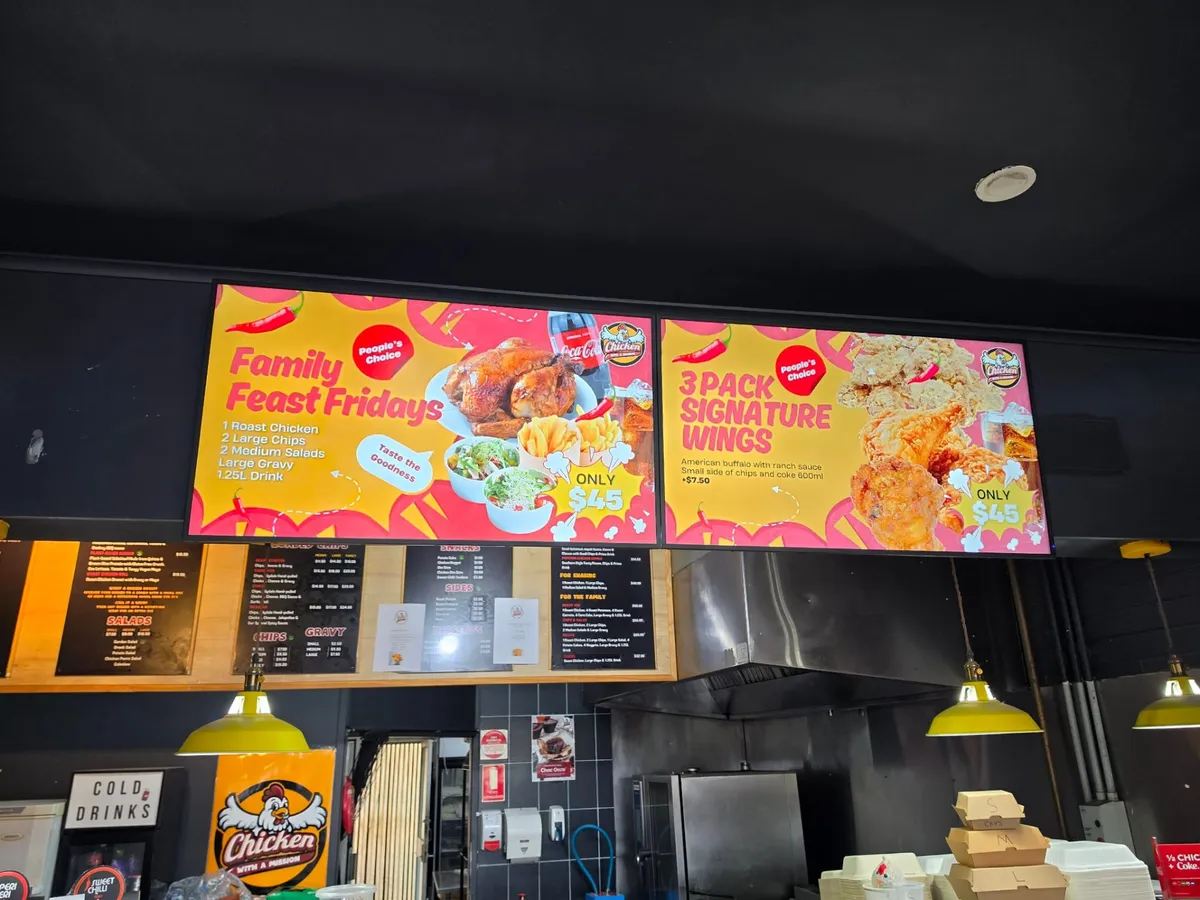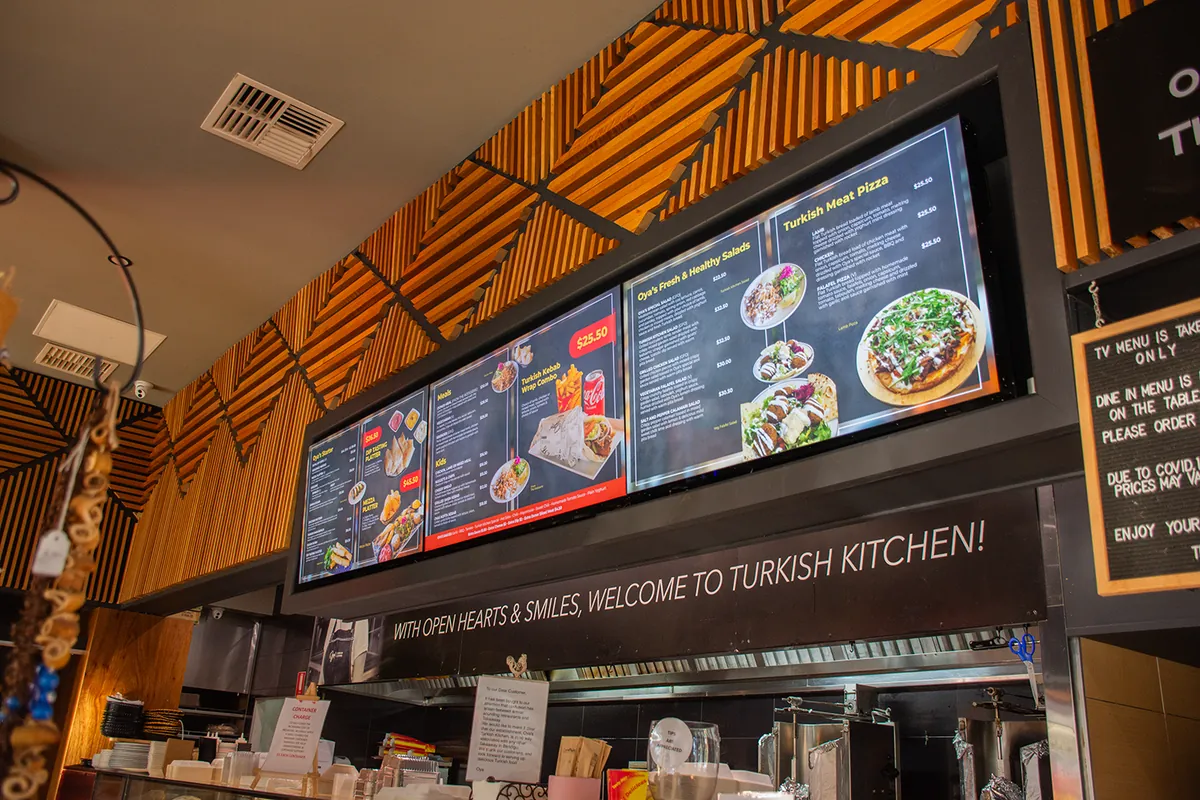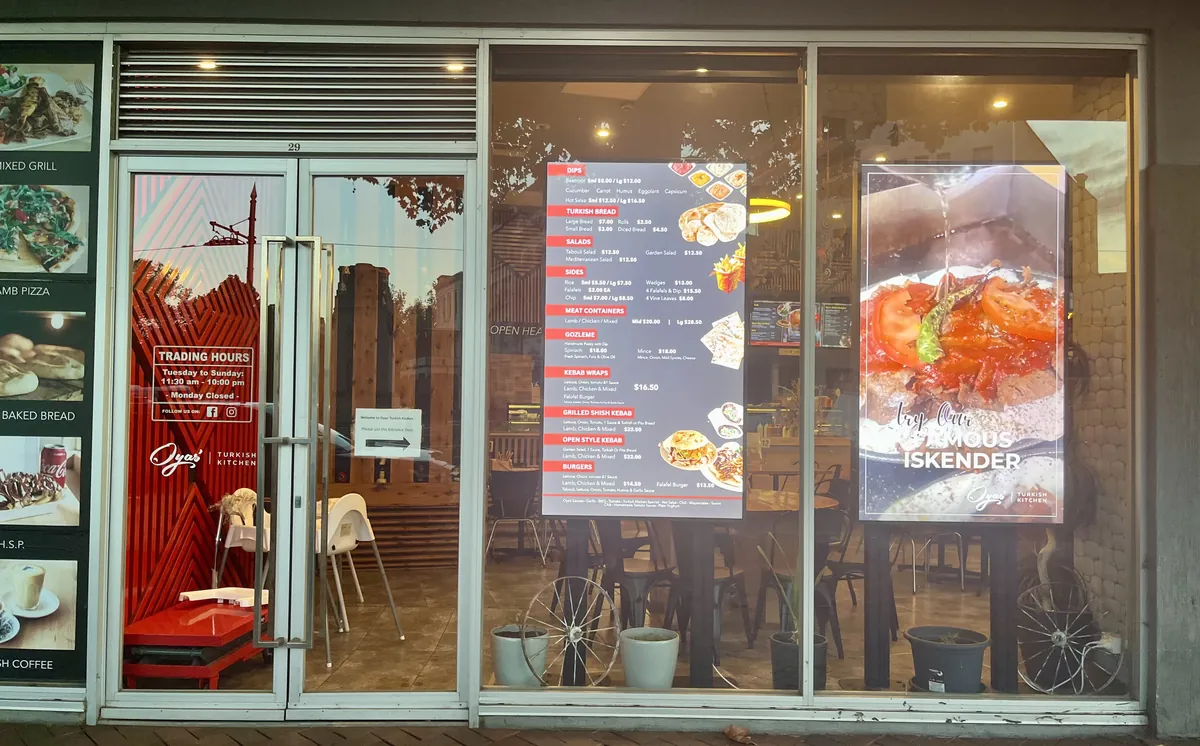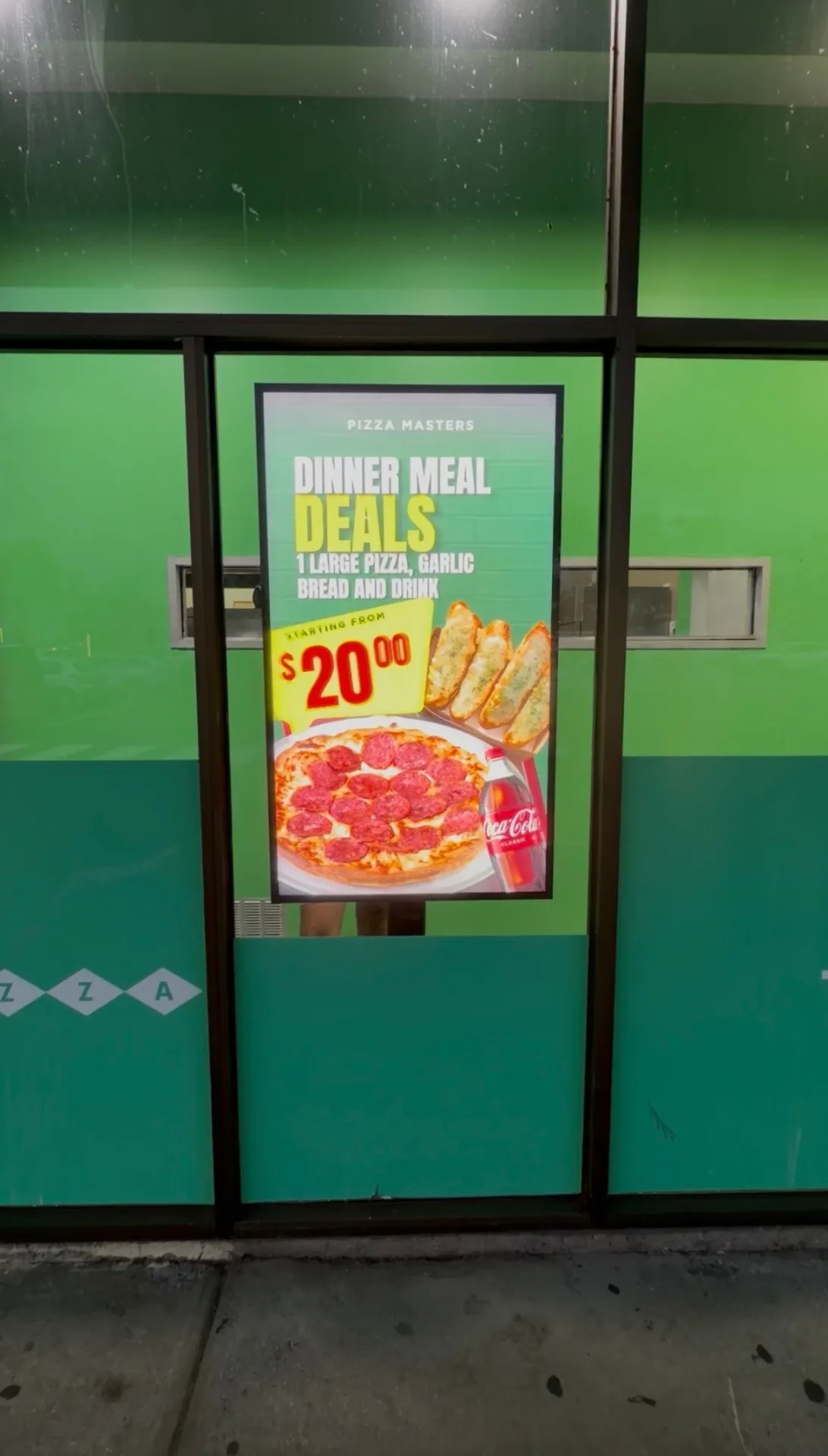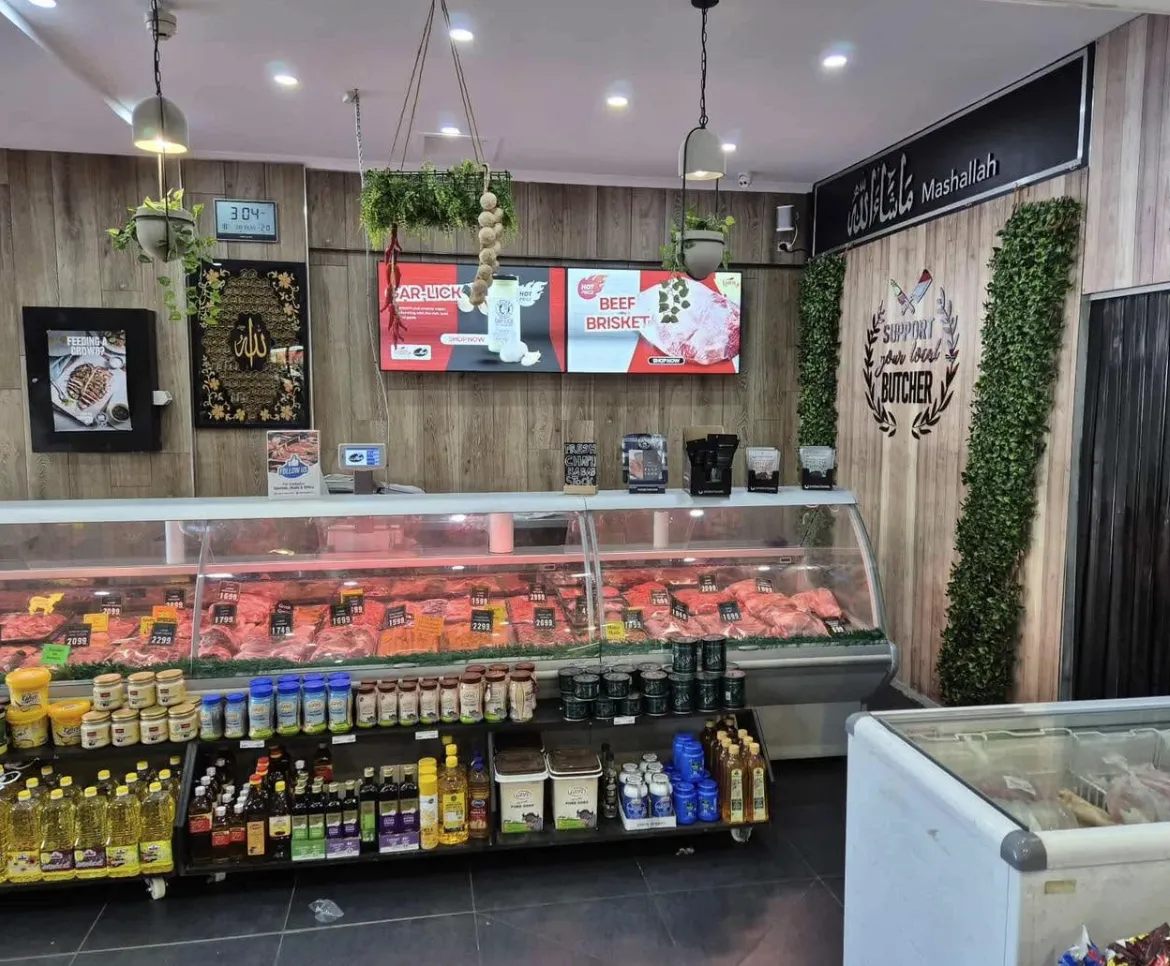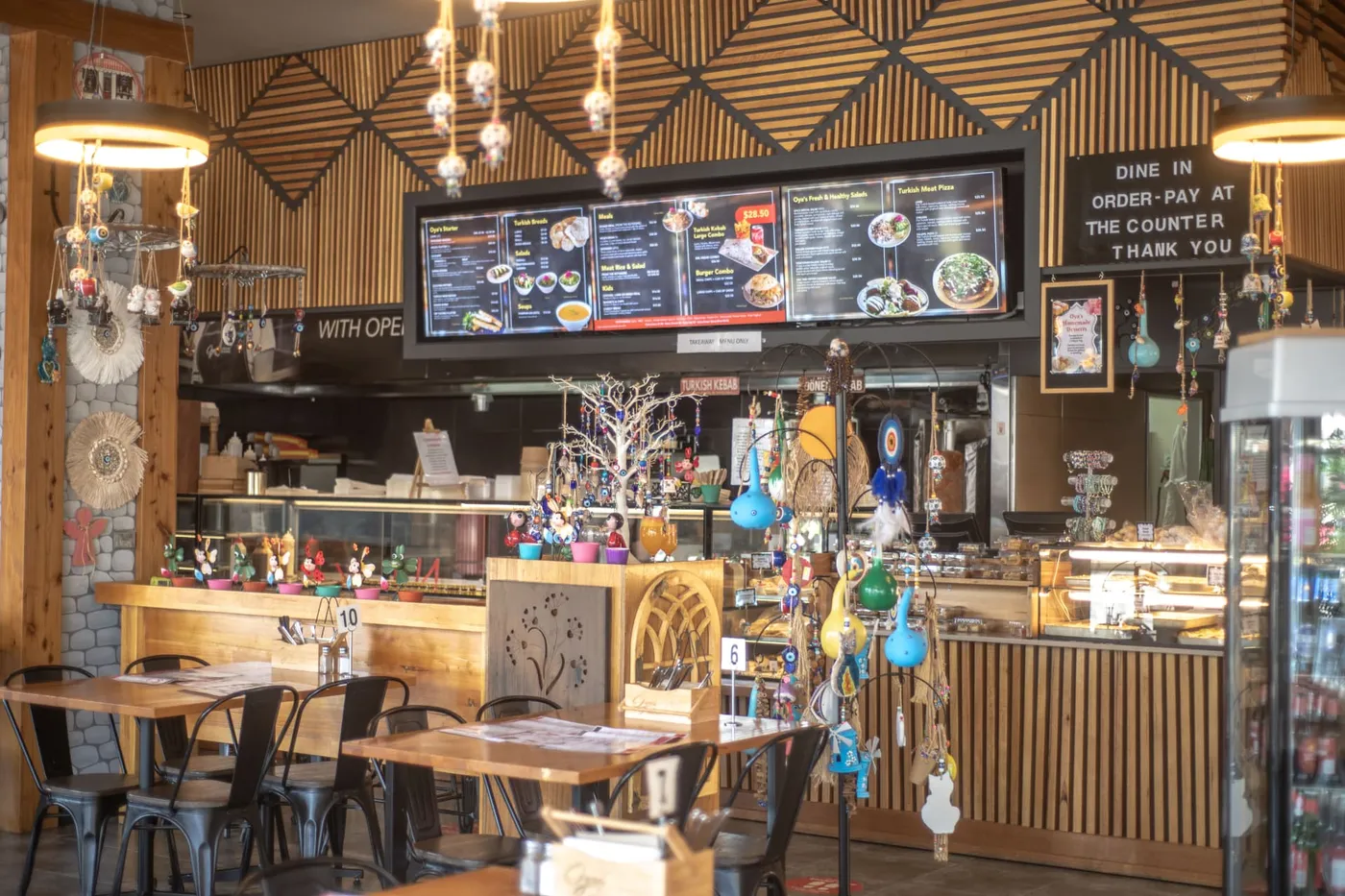
Food venues get more out of digital signage than almost any other kind of business, because the menu changes constantly, the decision is made in the shop, and the customer is standing there with time to look at something.
This is a practical guide to getting it right, written for owners rather than installers.
The three types of screen
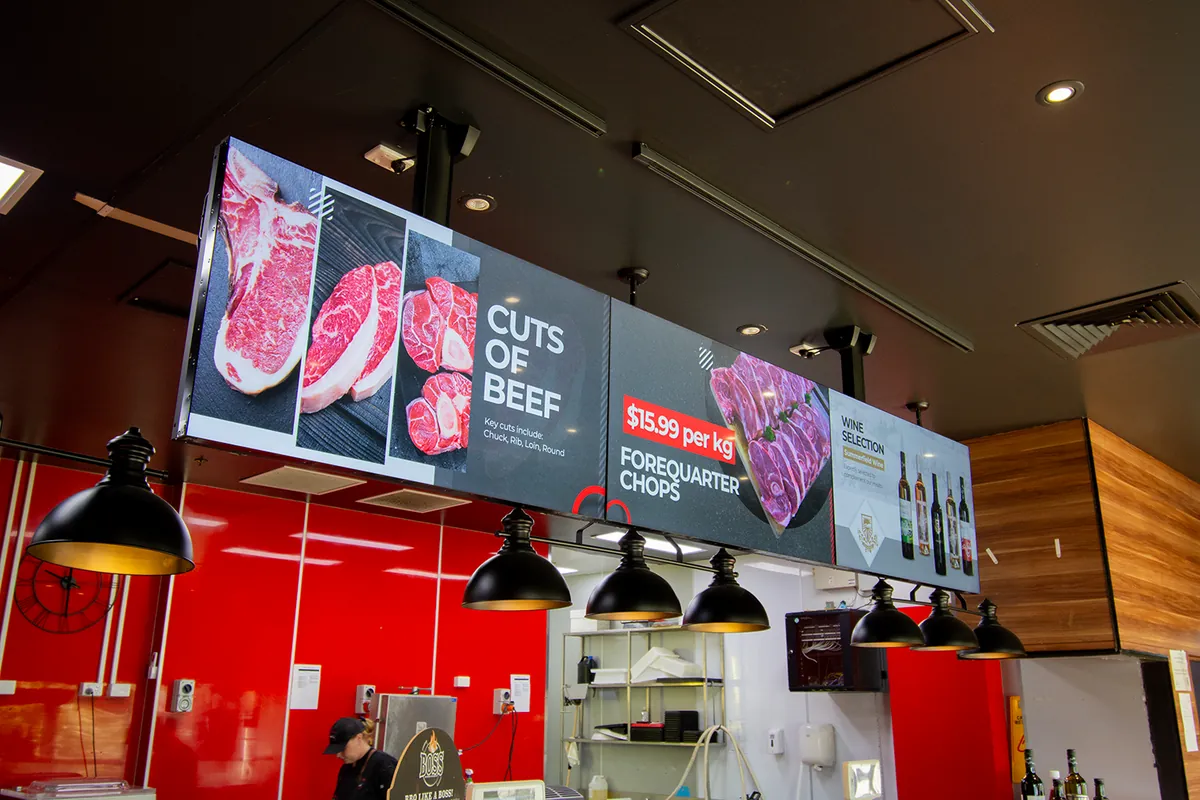
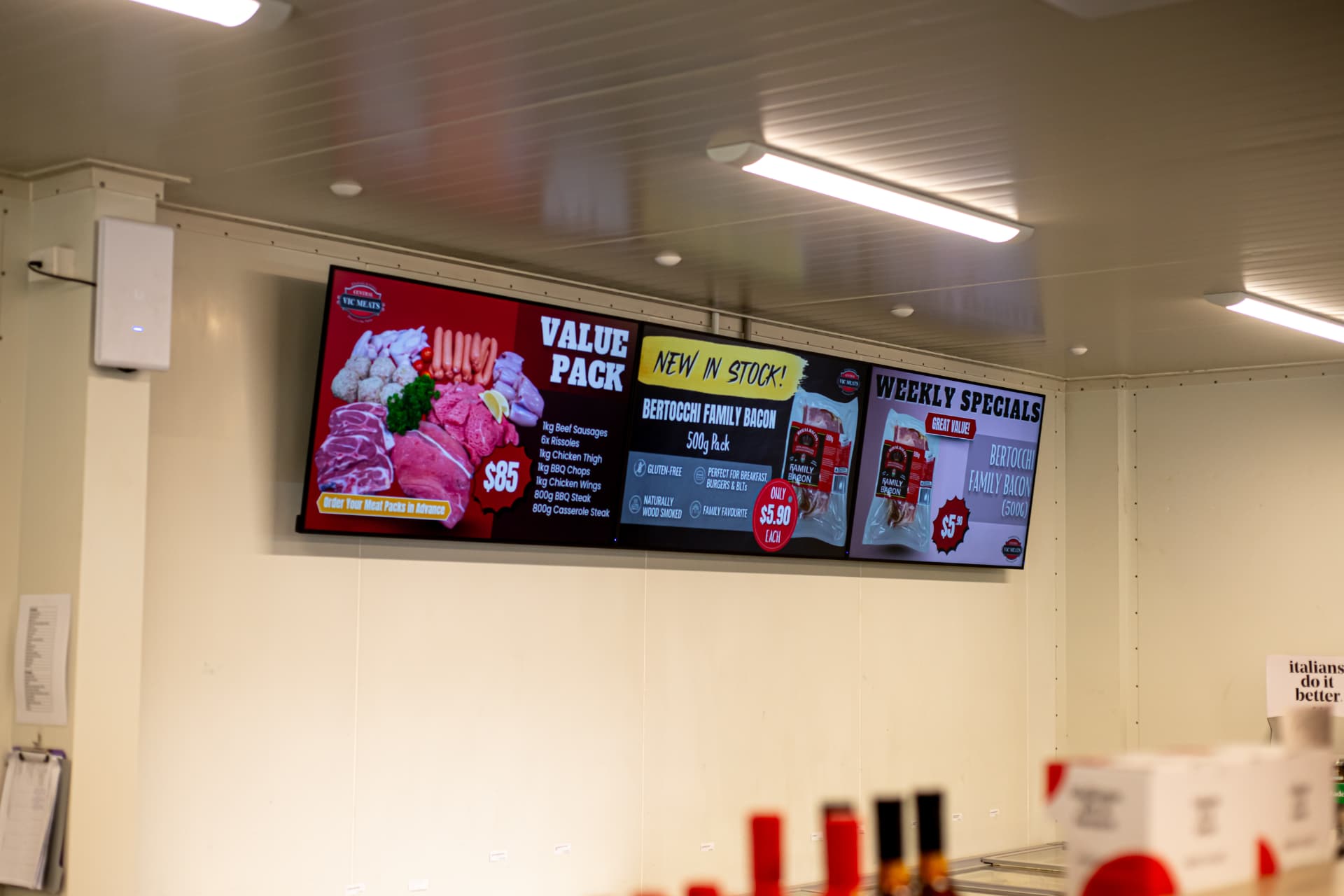
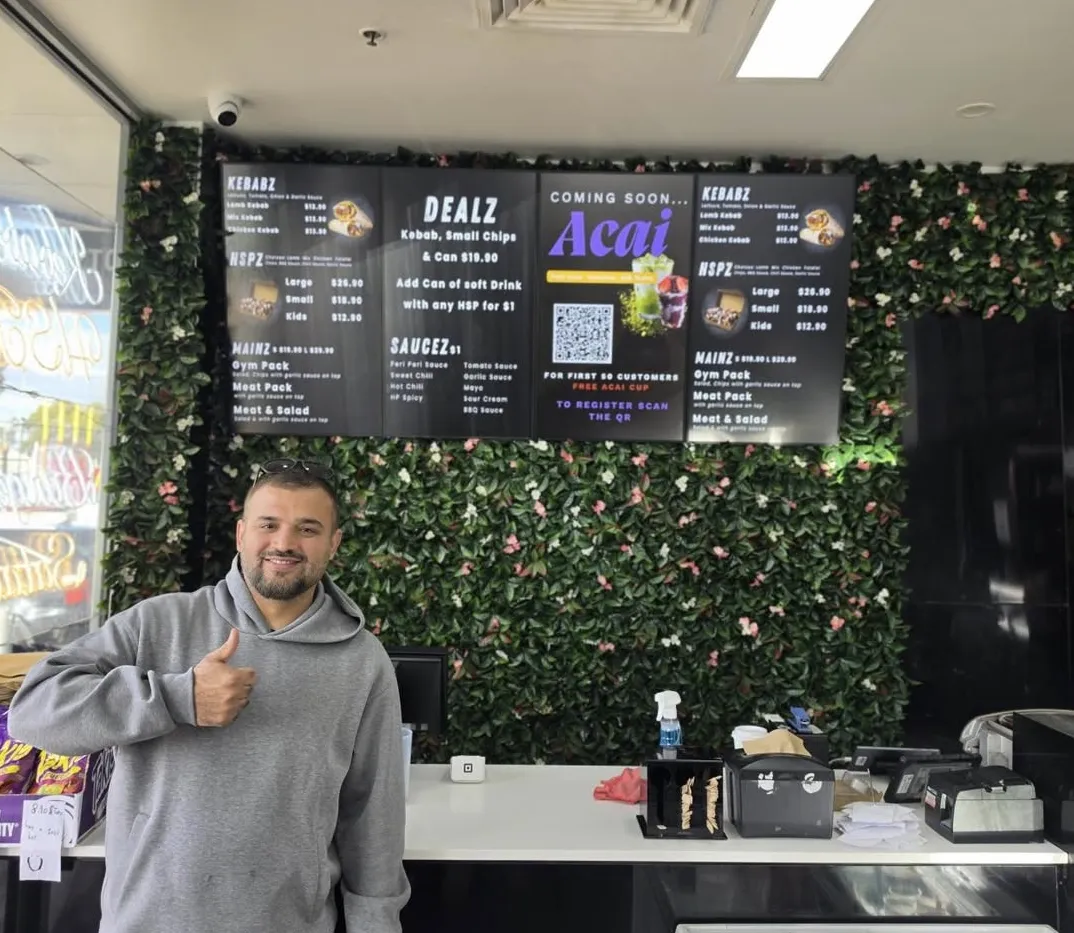
Menu boards. The screens behind the counter. Their job is to make ordering fast and to sell the higher-margin items. Usually two or three portrait screens side by side, sometimes a landscape run above the servery.
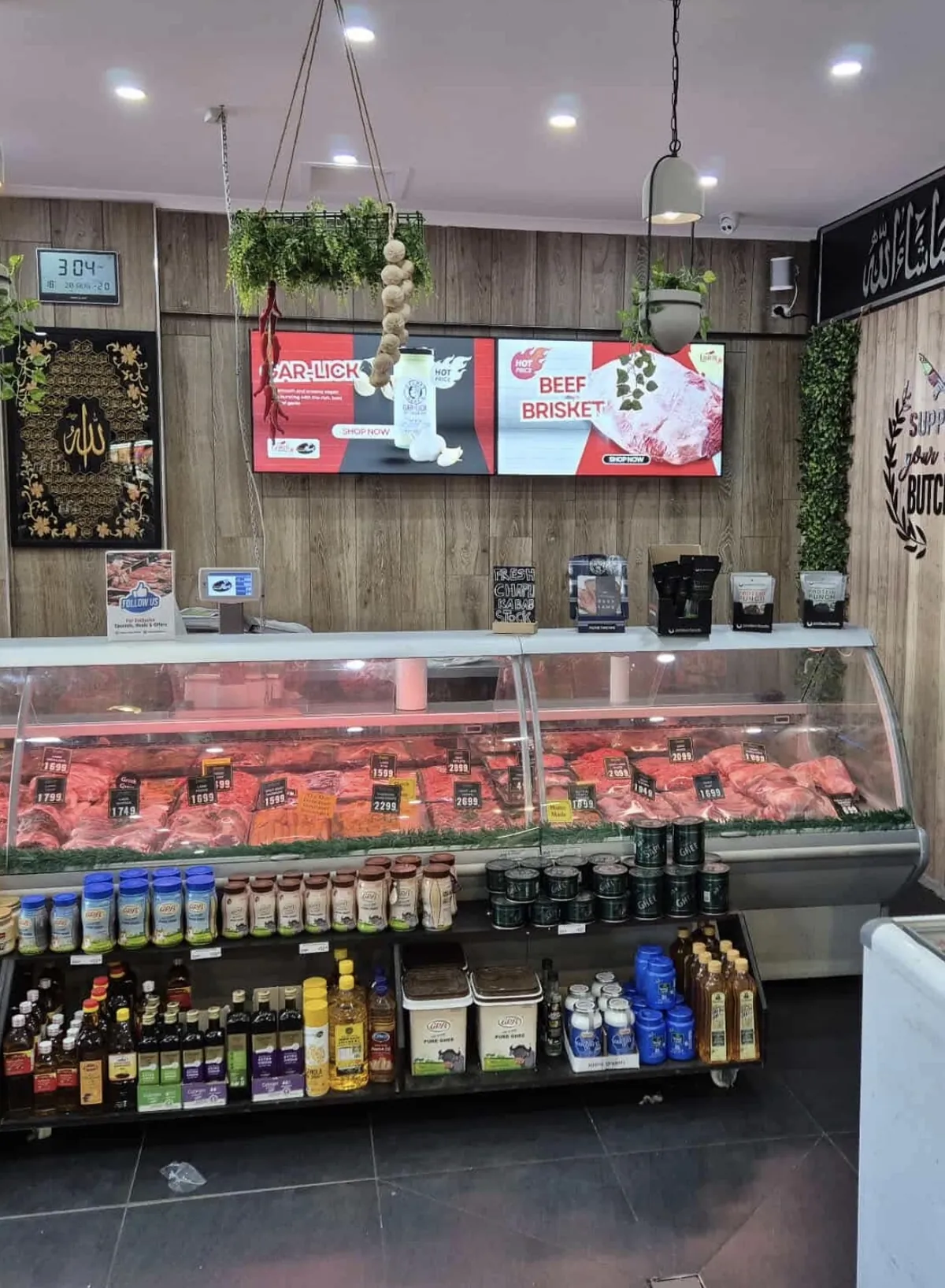
Window displays. High brightness screens facing the footpath, aimed at people who have not decided to come in yet. Coffee and cake in the afternoon, dinner specials from 4pm, catering for the office down the road.
Countertop screens. Small screens at the point of payment. Best used for add-ons and loyalty – the upsize, the slice, the "join our rewards" – plus a QR code for reviews.
Most shops start with menu boards. Window displays are the next best return if you are on a footpath with real traffic.
What to put on them
The order that works, roughly:
- The core menu, laid out for scanning. Group by category, keep descriptions to a handful of words, and get the prices aligned and readable from the back of the queue.
- Photos, but only good ones. Two or three strong images beat a photo of everything. Poor photos of food do measurable damage.
- Specials and high-margin items. Give them their own panel with room to breathe.
- Social proof. A Google rating, a short review, an award. It reassures people who have not been in before.
- The practical stuff. Allergen notes, card surcharge, opening hours over the public holidays, whether you cater.
What not to put up: a scan of your printed menu, tiny text, more than about seven items in a column, or an animation that loops so fast people cannot finish reading.
Sizing guide
The rough rule for readable text is that the smallest character should be about 1cm tall for every 3 metres of viewing distance.
- Small cafe, counter 3-4m from the queue: two 43-inch portrait screens is the standard, and it is standard for a reason – 43 inches in portrait fits a full menu category at readable size without dominating the wall.
- Busy takeaway with a queue to the door (5-7m): three or four 43-inch panels, or 55-inch if the wall allows.
- Drive-through or large servery: larger landscape panels, high brightness if any daylight hits them.
- Window: 46-inch minimum, 55-inch is the sweet spot for most shopfronts, 75-inch for wide glass on a main street.
Design tips that make a difference
- Light text on a dark background reads better on screens and is easier on the eye at night.
- Stick to two fonts and your brand colours. Menu boards are not the place to get creative with type.
- Leave whitespace. A crowded board slows ordering, which is the opposite of the point.
- Test it from where people actually stand – at the door, not at the counter.
Dayparting
Dayparting means the boards change automatically through the day: breakfast until 11, lunch until 2:30, an afternoon board, dinner from 5. It is set once and runs on a schedule.
Two benefits. Customers only see what they can order, so the queue moves faster. And you get four chances a day to push a different high-margin item rather than one crowded board trying to do all of it.
What it costs
Digital signage for food venues is normally a monthly package rather than a big upfront purchase, which suits how most shops manage cash flow. Bold Media Group's 2 × 43-inch menu board package starts from $225 per month, and that includes the commercial screens, the mounts, the media players, installation, the menu design, and unlimited content changes for three years.
Unlimited changes is the part worth checking with any provider. If updates are billed per change, the boards will go stale within six months – the same trap printed menus create.
Getting started
You do not need to work out the sizing yourself. We will come to the shop, measure the wall and the queue, look at the light through the window, and come back with a layout and a price. Most installs are done in a morning and the shop keeps trading.
Book a free site visit and we will show you exactly how it would look in your space.
We supply, install and manage digital menu boards and window screens for cafes from our Bendigo and Geelong offices – see digital signage, or our pages for Bendigo, Geelong and Melbourne.